Local History
The Osage
The first known people to inhabit Osceola and the surrounding area were the Osage. When Europeans first met the Wazhazhe, using rough French phonetics, they translated the name into the word "Osage." The Osage also called themselves by their ancient name, NiuKonska, which may be translated as "Little Ones of the Middle Waters." The Osage signed a treaty in 1825 which moved the tribe out of Missouri and allowed for a greater influx of settlers.
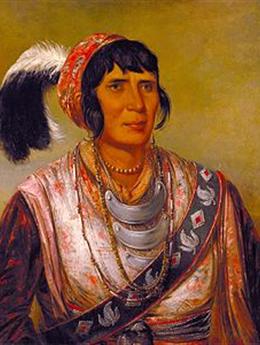
Chief Osceola
Osceola is named for the famous Seminole Chief Osceola. Osceola means "Black Water" in Seminole, fitting for a community that sits on the banks of the Osage River in southwest Missouri.
Trading post and steamboats
Some of the first white men to visit and eventually stay in St. Clair County were Jacob Coonce, Phillip Crow and Richard Crutchfield, who opened the first trading post on the Osage River downstream from the original Osage villages. In 1839, the town was named for Chief Osceola.
Osceola was considered the head of navigation on the Osage River. This brought prosperity to the community in the 1850s, with steamboats and wagon trains using Osceola as a trading center. As Osceola continued to prosper, it became engrossed in the slavery issue, and it would be thrown into the Civil War along with the rest of Missouri.
The Civil War
At the beginning of the Civil War, Osceola had more than twelve businesses, several churches, a bank and a newspaper office. In 1860, Osceola had 2,077 residents, but by 1865 only 183 people remained. General Jim Lane, an abolitionist commanding the Kansas Brigade, saw Osceola as a town of wealth and consequence, one that could be raided with little or no opposition. On September 23, 1861, he marched into Osceola, looted the town, and burned all but a few houses. The only thing he was unsuccessful in stealing was $150,000 in bank deposits, removed only minutes before his army of 1,500 entered the town.
In retaliation for Lane's raid, Quantrill and his guerrillas raided, burned and demolished Lawrence, Kansas. With the cry of "never forget Osceola" on their lips, the guerrillas made Jim Lane regret his march to Osceola. Veterans have since erected a monument in the Osceola Cemetery to commemorate over 200 men and women who believed in or fought for the Southern cause.
The dam and the lake
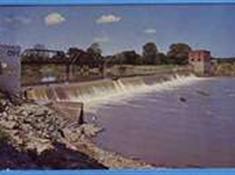
In 1929, the Osceola Dam was completed. The lake formed by the dam was promoted as the first step toward the Harry S. Truman Dam near Warsaw, which created Truman Lake. Today, Osceola offers some of the best fishing and hunting in the Ozarks.
Osceola today
Osceola continues to meet the future with the pioneer fortitude of its forefathers. According to the 2020 Census, its population is 909, with 2 museums, a county library, an airport, a hospital and medical facilities to meet the needs of its citizens. The fourth class municipal government provides a public utility system.